

In July, we visited Normandy in France. It was a trip I had wanted to make for a long time — a chance to visit the beaches where the D-Day landings took place during the Second World War.
Over several days, we visited museums, memorials, and cemeteries, reading and learning about the events that unfolded there. Again and again, we were reminded that many gave their lives so that we could live in freedom today.
One theme kept surfacing: freedom is not free. It comes at a cost — one that, in this case, was paid in human lives.
Walking through the war cemeteries was particularly moving. Row upon row of gravestones marked the resting places of young men, many from countries far from home, who came to fight so that the Europe we know would remain free. Living in the Netherlands — a country that was occupied during the war — these memories feel especially close. The impact of the war is woven into everyday life and history here.
So what can we learn from this? Perhaps above all, that freedom must be treasured.
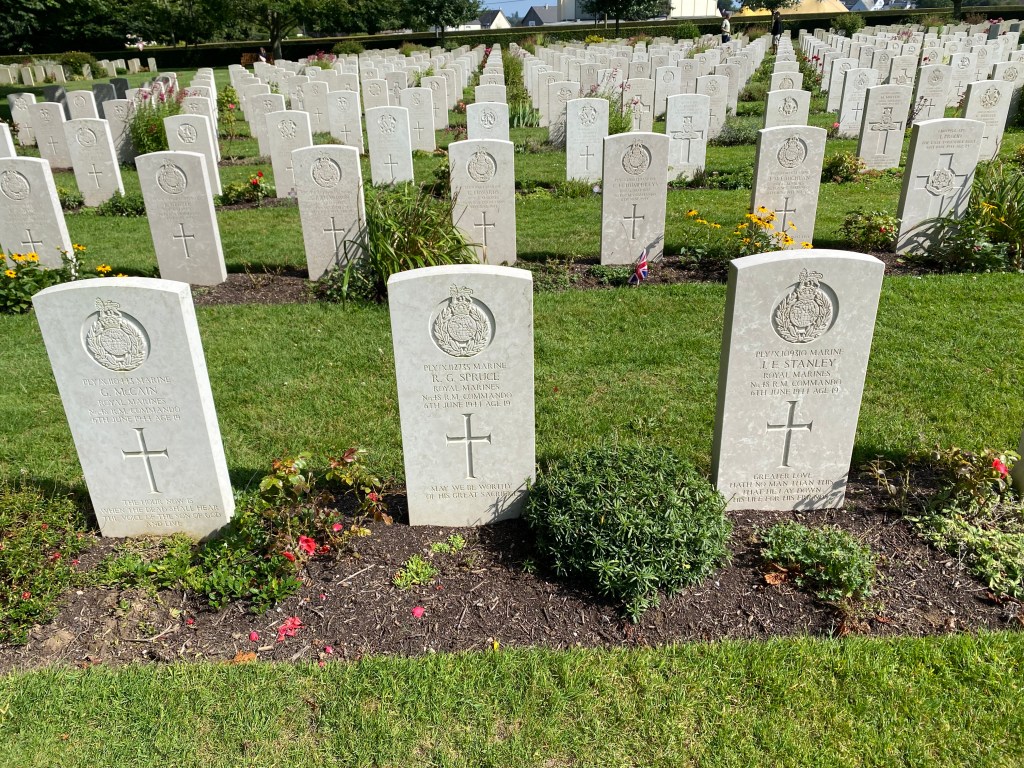
At the Bayeux War Cemetery, I was particularly struck by three gravestones, side by side, belonging to British Royal Marine Commandos — all aged just 19. Their inscriptions read:
“The hour now is when the dead shall hear the voice of the Son of God and live.”
“May we be worthy of his great sacrifice.”
“Greater love hath no man than this that he lay down his life for his friends”
I found these inscriptions deeply compelling – each standing on their own, but together they fit into a powerful narrative. The faith of former generations carved in stone for all to see.
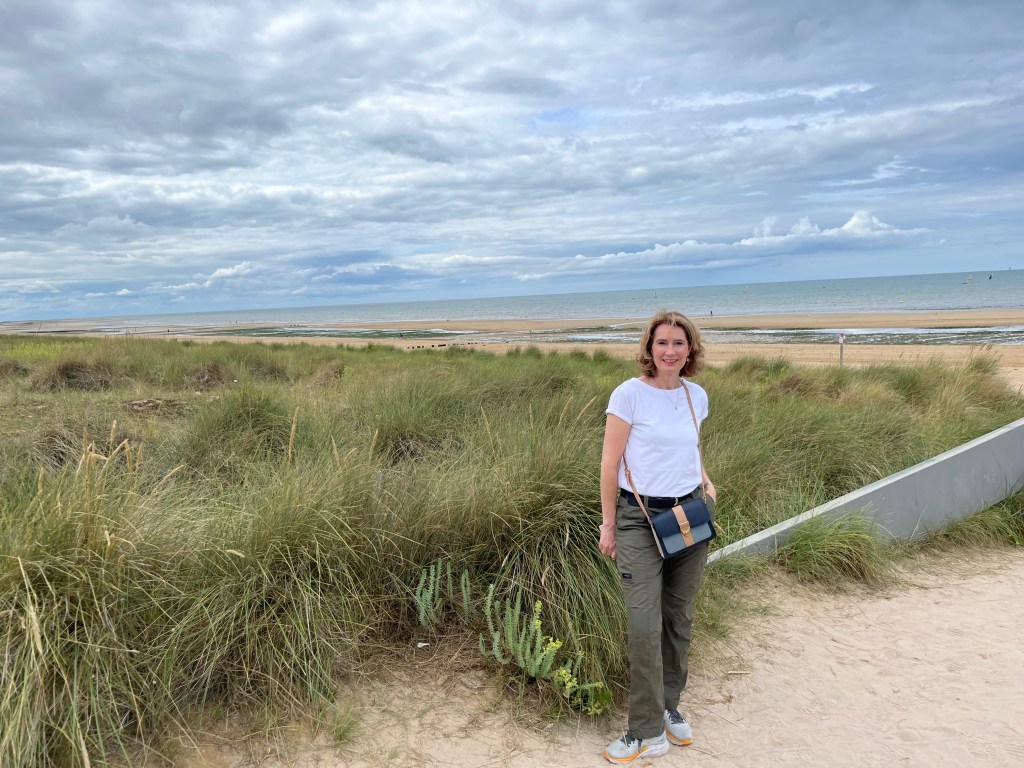
A decisive turning point in the liberation of Western Europe came with D-Day, when the Allied land campaign began to free France, Belgium, Luxembourg, and the Netherlands. The operation required years of planning and extraordinary coordination. It became the largest military operation in history, involving around 5,000 ships and 13,000 aircraft supporting the landings. Multiple Allied generals worked together to devise a strategy capable of opening a new front and pushing back German occupation. After nearly two years of preparation, these carefully coordinated operations were launched on a single day — a moment that would change the course of the war in Europe.We visited Juno Beach, one of the five Allied landing beaches on 6 June 1944 and the primary landing site for Canadian forces. While the beaches are often remembered collectively, Juno stands out as a place where Canada played a decisive and costly role in the liberation of Western Europe.
Around 14,000 Canadian soldiers landed on this beach, facing fierce resistance yet advancing further inland than any other Allied force on the first day. The nearby Juno Beach Centre tells many of the individual stories of soldiers and their families with great care. These young men gave their lives for people in another land, far from home, on a continent many of them had never seen before.
The story of Caen offers another perspective — that of the civilian cost of liberation. During the Battle of Normandy, the Abbaye aux Hommes, now Caen’s city hall, became a refuge for thousands of civilians seeking shelter from relentless bombing. While much of the city was reduced to rubble, the abbey’s thick stone walls protected families huddled underground for weeks. It stands today not only as a seat of civic life, but as a powerful reminder of resilience in the face of devastation.
In the days following D-Day, the Allied forces remained in a precarious position. Had German forces been able to move large reinforcements quickly into Normandy, the invasion could have failed. Cities such as Caen were vital transport and communications hubs, and to disrupt German movement and coordination, the Allies subjected them to heavy bombing. While this strategy played a crucial role in preventing German reinforcements from reaching the beaches, it came at a devastating cost to innocent civilians, many of whom lost their lives in the struggle for Europe’s liberation.
Standing in these places, it becomes clear that the story of Normandy is not only one of military strategy and victory, but of sacrifice — soldier and civilian alike. Remembering this deepens our understanding of the freedom we enjoy today, and the price that was paid for it.

 Rachel's Round-up
Leave a comment